Friday, December 11, 2009

Loophole in Senate Bill Would Allow Insurers to Deny Care

A loophole in the Senate Healthcare bill would allow Insurance companies to place dollar limits on needed services, essentially allowing them to play the same games that they play now. It would allow insurance companies to deny coverage. Meanwhile, the insurance companies would be enjoying the benefit of all the new customers pushed onto their roles.

This is what I warned about in some of my earlier Healthcare reform posts - mainly that (if not done right) this Healthcare Reform debacle could end up being worse than the status quo.

In my comments about the public option I stated that the new Senate plan could work...and took the position that I was willing to wait and see what the new plan would do before slamming the idea completely.... but I have to say... i've probably seen enough.

This is exactly why not having a public option is a problem... because then, insurance companies could simply game the system. Private insurers are not going to compete against themselves. The private sector can't be trusted to handle healthcare.

Healthcare Reform Bill Flirting With Defeat Yet Again

Doubts grow about the possibility of any Healthcare Reform bill at all. Give an inch and they'll try to take a mile. The Conservatives in the Democratic Party will keep playing this game until there is no bill left to pass. They want to water it down to nothing.

Funny how Republicans and their Conservative allies on the Democratic side are concerned about costs all of a sudden. I don't recall any of these do-nothing elite jackasses being concerned about the costs on bills where they were green lighting and co-signing wars, which have now cost taxpayers over $1 Trillion. When it comes to war.... or wasteful spending in their States and districts back home (for nonsensical pork projects), there always seems to be money... no problem.

But when it comes to the U.S. investing in its own people...there always seems to be a problem.

That's why I have been saying that the USA is finito long term as far as being a great power. In a few decades, the U.S. will be just another Country....and it may only barely manage to even hold that status.

That's why I have mentioned that I might consider Canada (was only half joking).

It's no coincidence that although Canada is our neighbor to the north, it is much more closely aligned with Europe and has a different view about what its fundamental priorities are. Most modern, advanced, industrialized Countries understand that a nation won't be able to go far if it doesn't invest in its people.

A Soulful Christmas Mix


Not really in the Christmas spirit. Christmas typically = the worst time of the year for me. But I love Soulful Christmas music.

Here's a Soul & Jazz Christmas Mix courtesy of Dave B. (The Heavy Soul Brutha)

Listen Here

Find more HeavySoulBrutha mixes here.

Also hear a bonus Christmas mix from guest podcaster.

Two for One - Maceo and Grover Washington Jr.

Maceo & All the Kings Men


Hard to believe that Grover Washington Jr. has been gone for 10 years (10 years this month). Hear the song "Masterpiece". which I couldn't embed.

On Being Black in a White Economy


I could have also titled this.... why I hate being Black or why being Black sucks. But I covered that territory and made that point plenty of times.

The experiences of Black job seekers in a recent NYT report seem to mirror some of my own experiences. I have been under-employed for quite a while now and have often wondered how much of a part race may be playing in my disappointing job search. Race certainly has played a part from a class standpoint, since the legacy of race and class did not provide me with the best opportunity to attend the most exclusive schools and have access to the kinds of networks that would get me in the door. If you are white and come from privileged circumstances, those things are sort of thrown in as perks. Granted, most of my job search interests have been in the government sector as opposed to the private sector (can't stand the private sector) but I have still had some of the same experiences described in the NYT report.

This was also covered on the FN blog a few days ago. (by Philadelphia attorney Wayne Bennett)

For example, I too have felt the need in recent years to "clean" my resume... to wipe clean anything that would indicate race. There has never really been anything too overt on my resume that was "in your face" race identifying... because that's just not what i'm about anyway. From a professional point of view, I have always known that this was not the thing to do...and I never had the urge or interest to do so.

However, years ago I was briefly a member of an organization called NOBLE... one of the most prestigious & impressive Black professional/social organizations in the U.S... but wiped it from the resume. I'm no longer a member...but even if I were... I wouldn't mention it. I also avoid providing too many Black references.... wiped my reference page almost completely....except for one co-worker. There are many great professors who I probably could have added.... but nope.

I have been on interviews where I sense a feeling of disappointment or confusion when I walk into the room (not that i'm not impecably dressed...but i'm not who they thought would walk in). I am not sure that the interview is over at that point, but I can tell that the normal hurdles get raised immediately, and I have to prove why I even belong at the interview. The signals that they give off = who do you think you are? and Why are you even here?.

I also leave the race box blank on any EEO forms that I fill out... or I will sometimes leave the whole form blank. There was one gov't employer that required that the box be filled in (still baffled by that...because I thought they couldn't compel an answer to that question). I will sometimes check the box for "other" just for fun. But I avoid "Black".... because this seems to be the equivalent of admitting to a disease that will prevent me from being hired (in the eyes of the wider society).

I am also someone who wants to avoid the whole victim thing... although I often joke with co-workers that the system is not for us. They don't know that i'm not always joking...they can't even conceive it... because in their minds, the existence of a Black President has made all of these problems magically go away. But I still don't like the victim branding.... because I think (I know) that I am just as good as anyone else, especially for the type and level of employment that I have applied for.

I also find that being Black and male seems much worse...than simply being Black. This seems to pan out in the stats.

And here's a twist... I don't completely blame white society. Sure, it shares most of the blame...but (in my mind at least) I assign some of the blame to so-called Black culture or the "Black Community" for fueling this situation. By virtue of being Black I understand that I am held prisoner to a race (whether I like it or not...and I hate it) that trashes and brings shame to its own image...and feeds the very stereotypes that so many people fought to overcome 40, 50, 60, 100 years ago. Some even gave their lives fighting for the dignity of Blacks.

Sometimes I see my skin as worse than prison bars... metaphorically that's exactly how I feel everyday.

Thursday, December 10, 2009

The President Receives the Nobel Peace Prize

NOBEL-OBAMA/
Nobel Peace Prize laureate U.S. President Barack Obama poses with his diploma and medal after receiving the prize at the award ceremony in Oslo City Hall December 10, 2009. The Nobel committee is awarding the peace prize to Obama for his extraordinary efforts to strengthen international diplomacy and cooperation between peoples and cited his push for nuclear disarmament.
-----REUTERS/Kevin Lamarque


Norway Nobel Peace Obama
President and Nobel Peace Prize laureate Barack Obama poses with his medal and diploma at the Nobel Peace Prize ceremony at City Hall in Oslo, Thursday, Dec. 10, 2009.
----AP Photo/Odd Andersen


The President's Remarks in Oslo:


The White House

Office of the Press Secretary
For Immediate Release
December 10, 2009
Remarks by the President at the Acceptance of the Nobel Peace Prize

Oslo City Hall
Oslo, Norway

1:44 P.M. CET


THE PRESIDENT: Your Majesties, Your Royal Highnesses, distinguished members of the Norwegian Nobel Committee, citizens of America, and citizens of the world:

I receive this honor with deep gratitude and great humility. It is an award that speaks to our highest aspirations -- that for all the cruelty and hardship of our world, we are not mere prisoners of fate. Our actions matter, and can bend history in the direction of justice.

And yet I would be remiss if I did not acknowledge the considerable controversy that your generous decision has generated. (Laughter.) In part, this is because I am at the beginning, and not the end, of my labors on the world stage. Compared to some of the giants of history who've received this prize -- Schweitzer and King; Marshall and Mandela -- my accomplishments are slight. And then there are the men and women around the world who have been jailed and beaten in the pursuit of justice; those who toil in humanitarian organizations to relieve suffering; the unrecognized millions whose quiet acts of courage and compassion inspire even the most hardened cynics. I cannot argue with those who find these men and women -- some known, some obscure to all but those they help -- to be far more deserving of this honor than I.

But perhaps the most profound issue surrounding my receipt of this prize is the fact that I am the Commander-in-Chief of the military of a nation in the midst of two wars. One of these wars is winding down. The other is a conflict that America did not seek; one in which we are joined by 42 other countries -- including Norway -- in an effort to defend ourselves and all nations from further attacks.

Still, we are at war, and I'm responsible for the deployment of thousands of young Americans to battle in a distant land. Some will kill, and some will be killed. And so I come here with an acute sense of the costs of armed conflict -- filled with difficult questions about the relationship between war and peace, and our effort to replace one with the other.

Now these questions are not new. War, in one form or another, appeared with the first man. At the dawn of history, its morality was not questioned; it was simply a fact, like drought or disease -- the manner in which tribes and then civilizations sought power and settled their differences.

And over time, as codes of law sought to control violence within groups, so did philosophers and clerics and statesmen seek to regulate the destructive power of war. The concept of a "just war" emerged, suggesting that war is justified only when certain conditions were met: if it is waged as a last resort or in self-defense; if the force used is proportional; and if, whenever possible, civilians are spared from violence.

Of course, we know that for most of history, this concept of "just war" was rarely observed. The capacity of human beings to think up new ways to kill one another proved inexhaustible, as did our capacity to exempt from mercy those who look different or pray to a different God. Wars between armies gave way to wars between nations -- total wars in which the distinction between combatant and civilian became blurred. In the span of 30 years, such carnage would twice engulf this continent. And while it's hard to conceive of a cause more just than the defeat of the Third Reich and the Axis powers, World War II was a conflict in which the total number of civilians who died exceeded the number of soldiers who perished.

In the wake of such destruction, and with the advent of the nuclear age, it became clear to victor and vanquished alike that the world needed institutions to prevent another world war. And so, a quarter century after the United States Senate rejected the League of Nations -- an idea for which Woodrow Wilson received this prize -- America led the world in constructing an architecture to keep the peace: a Marshall Plan and a United Nations, mechanisms to govern the waging of war, treaties to protect human rights, prevent genocide, restrict the most dangerous weapons.

In many ways, these efforts succeeded. Yes, terrible wars have been fought, and atrocities committed. But there has been no Third World War. The Cold War ended with jubilant crowds dismantling a wall. Commerce has stitched much of the world together. Billions have been lifted from poverty. The ideals of liberty and self-determination, equality and the rule of law have haltingly advanced. We are the heirs of the fortitude and foresight of generations past, and it is a legacy for which my own country is rightfully proud.

And yet, a decade into a new century, this old architecture is buckling under the weight of new threats. The world may no longer shudder at the prospect of war between two nuclear superpowers, but proliferation may increase the risk of catastrophe. Terrorism has long been a tactic, but modern technology allows a few small men with outsized rage to murder innocents on a horrific scale.

Moreover, wars between nations have increasingly given way to wars within nations. The resurgence of ethnic or sectarian conflicts; the growth of secessionist movements, insurgencies, and failed states -- all these things have increasingly trapped civilians in unending chaos. In today's wars, many more civilians are killed than soldiers; the seeds of future conflict are sown, economies are wrecked, civil societies torn asunder, refugees amassed, children scarred.

I do not bring with me today a definitive solution to the problems of war. What I do know is that meeting these challenges will require the same vision, hard work, and persistence of those men and women who acted so boldly decades ago. And it will require us to think in new ways about the notions of just war and the imperatives of a just peace.

We must begin by acknowledging the hard truth: We will not eradicate violent conflict in our lifetimes. There will be times when nations -- acting individually or in concert -- will find the use of force not only necessary but morally justified.

I make this statement mindful of what Martin Luther King Jr. said in this same ceremony years ago: "Violence never brings permanent peace. It solves no social problem: it merely creates new and more complicated ones." As someone who stands here as a direct consequence of Dr. King's life work, I am living testimony to the moral force of non-violence. I know there's nothing weak -- nothing passive -- nothing naïve -- in the creed and lives of Gandhi and King.

But as a head of state sworn to protect and defend my nation, I cannot be guided by their examples alone. I face the world as it is, and cannot stand idle in the face of threats to the American people. For make no mistake: Evil does exist in the world. A non-violent movement could not have halted Hitler's armies. Negotiations cannot convince al Qaeda's leaders to lay down their arms. To say that force may sometimes be necessary is not a call to cynicism -- it is a recognition of history; the imperfections of man and the limits of reason.

I raise this point, I begin with this point because in many countries there is a deep ambivalence about military action today, no matter what the cause. And at times, this is joined by a reflexive suspicion of America, the world's sole military superpower.

But the world must remember that it was not simply international institutions -- not just treaties and declarations -- that brought stability to a post-World War II world. Whatever mistakes we have made, the plain fact is this: The United States of America has helped underwrite global security for more than six decades with the blood of our citizens and the strength of our arms. The service and sacrifice of our men and women in uniform has promoted peace and prosperity from Germany to Korea, and enabled democracy to take hold in places like the Balkans. We have borne this burden not because we seek to impose our will. We have done so out of enlightened self-interest -- because we seek a better future for our children and grandchildren, and we believe that their lives will be better if others' children and grandchildren can live in freedom and prosperity.

So yes, the instruments of war do have a role to play in preserving the peace. And yet this truth must coexist with another -- that no matter how justified, war promises human tragedy. The soldier's courage and sacrifice is full of glory, expressing devotion to country, to cause, to comrades in arms. But war itself is never glorious, and we must never trumpet it as such.

So part of our challenge is reconciling these two seemingly inreconcilable truths -- that war is sometimes necessary, and war at some level is an expression of human folly. Concretely, we must direct our effort to the task that President Kennedy called for long ago. "Let us focus," he said, "on a more practical, more attainable peace, based not on a sudden revolution in human nature but on a gradual evolution in human institutions." A gradual evolution of human institutions.

What might this evolution look like? What might these practical steps be?

To begin with, I believe that all nations -- strong and weak alike -- must adhere to standards that govern the use of force. I -- like any head of state -- reserve the right to act unilaterally if necessary to defend my nation. Nevertheless, I am convinced that adhering to standards, international standards, strengthens those who do, and isolates and weakens those who don't.

The world rallied around America after the 9/11 attacks, and continues to support our efforts in Afghanistan, because of the horror of those senseless attacks and the recognized principle of self-defense. Likewise, the world recognized the need to confront Saddam Hussein when he invaded Kuwait -- a consensus that sent a clear message to all about the cost of aggression.

Furthermore, America -- in fact, no nation -- can insist that others follow the rules of the road if we refuse to follow them ourselves. For when we don't, our actions appear arbitrary and undercut the legitimacy of future interventions, no matter how justified.

And this becomes particularly important when the purpose of military action extends beyond self-defense or the defense of one nation against an aggressor. More and more, we all confront difficult questions about how to prevent the slaughter of civilians by their own government, or to stop a civil war whose violence and suffering can engulf an entire region.

I believe that force can be justified on humanitarian grounds, as it was in the Balkans, or in other places that have been scarred by war. Inaction tears at our conscience and can lead to more costly intervention later. That's why all responsible nations must embrace the role that militaries with a clear mandate can play to keep the peace.

America's commitment to global security will never waver. But in a world in which threats are more diffuse, and missions more complex, America cannot act alone. America alone cannot secure the peace. This is true in Afghanistan. This is true in failed states like Somalia, where terrorism and piracy is joined by famine and human suffering. And sadly, it will continue to be true in unstable regions for years to come.

The leaders and soldiers of NATO countries, and other friends and allies, demonstrate this truth through the capacity and courage they've shown in Afghanistan. But in many countries, there is a disconnect between the efforts of those who serve and the ambivalence of the broader public. I understand why war is not popular, but I also know this: The belief that peace is desirable is rarely enough to achieve it. Peace requires responsibility. Peace entails sacrifice. That's why NATO continues to be indispensable. That's why we must strengthen U.N. and regional peacekeeping, and not leave the task to a few countries. That's why we honor those who return home from peacekeeping and training abroad to Oslo and Rome; to Ottawa and Sydney; to Dhaka and Kigali -- we honor them not as makers of war, but of wagers -- but as wagers of peace.

Let me make one final point about the use of force. Even as we make difficult decisions about going to war, we must also think clearly about how we fight it. The Nobel Committee recognized this truth in awarding its first prize for peace to Henry Dunant -- the founder of the Red Cross, and a driving force behind the Geneva Conventions.

Where force is necessary, we have a moral and strategic interest in binding ourselves to certain rules of conduct. And even as we confront a vicious adversary that abides by no rules, I believe the United States of America must remain a standard bearer in the conduct of war. That is what makes us different from those whom we fight. That is a source of our strength. That is why I prohibited torture. That is why I ordered the prison at Guantanamo Bay closed. And that is why I have reaffirmed America's commitment to abide by the Geneva Conventions. We lose ourselves when we compromise the very ideals that we fight to defend. (Applause.) And we honor -- we honor those ideals by upholding them not when it's easy, but when it is hard.

I have spoken at some length to the question that must weigh on our minds and our hearts as we choose to wage war. But let me now turn to our effort to avoid such tragic choices, and speak of three ways that we can build a just and lasting peace.

First, in dealing with those nations that break rules and laws, I believe that we must develop alternatives to violence that are tough enough to actually change behavior -- for if we want a lasting peace, then the words of the international community must mean something. Those regimes that break the rules must be held accountable. Sanctions must exact a real price. Intransigence must be met with increased pressure -- and such pressure exists only when the world stands together as one.

One urgent example is the effort to prevent the spread of nuclear weapons, and to seek a world without them. In the middle of the last century, nations agreed to be bound by a treaty whose bargain is clear: All will have access to peaceful nuclear power; those without nuclear weapons will forsake them; and those with nuclear weapons will work towards disarmament. I am committed to upholding this treaty. It is a centerpiece of my foreign policy. And I'm working with President Medvedev to reduce America and Russia's nuclear stockpiles.

But it is also incumbent upon all of us to insist that nations like Iran and North Korea do not game the system. Those who claim to respect international law cannot avert their eyes when those laws are flouted. Those who care for their own security cannot ignore the danger of an arms race in the Middle East or East Asia. Those who seek peace cannot stand idly by as nations arm themselves for nuclear war.

The same principle applies to those who violate international laws by brutalizing their own people. When there is genocide in Darfur, systematic rape in Congo, repression in Burma -- there must be consequences. Yes, there will be engagement; yes, there will be diplomacy -- but there must be consequences when those things fail. And the closer we stand together, the less likely we will be faced with the choice between armed intervention and complicity in oppression.

This brings me to a second point -- the nature of the peace that we seek. For peace is not merely the absence of visible conflict. Only a just peace based on the inherent rights and dignity of every individual can truly be lasting.

It was this insight that drove drafters of the Universal Declaration of Human Rights after the Second World War. In the wake of devastation, they recognized that if human rights are not protected, peace is a hollow promise.

And yet too often, these words are ignored. For some countries, the failure to uphold human rights is excused by the false suggestion that these are somehow Western principles, foreign to local cultures or stages of a nation's development. And within America, there has long been a tension between those who describe themselves as realists or idealists -- a tension that suggests a stark choice between the narrow pursuit of interests or an endless campaign to impose our values around the world.

I reject these choices. I believe that peace is unstable where citizens are denied the right to speak freely or worship as they please; choose their own leaders or assemble without fear. Pent-up grievances fester, and the suppression of tribal and religious identity can lead to violence. We also know that the opposite is true. Only when Europe became free did it finally find peace. America has never fought a war against a democracy, and our closest friends are governments that protect the rights of their citizens. No matter how callously defined, neither America's interests -- nor the world's -- are served by the denial of human aspirations.

So even as we respect the unique culture and traditions of different countries, America will always be a voice for those aspirations that are universal. We will bear witness to the quiet dignity of reformers like Aung Sang Suu Kyi; to the bravery of Zimbabweans who cast their ballots in the face of beatings; to the hundreds of thousands who have marched silently through the streets of Iran. It is telling that the leaders of these governments fear the aspirations of their own people more than the power of any other nation. And it is the responsibility of all free people and free nations to make clear that these movements -- these movements of hope and history -- they have us on their side.

Let me also say this: The promotion of human rights cannot be about exhortation alone. At times, it must be coupled with painstaking diplomacy. I know that engagement with repressive regimes lacks the satisfying purity of indignation. But I also know that sanctions without outreach -- condemnation without discussion -- can carry forward only a crippling status quo. No repressive regime can move down a new path unless it has the choice of an open door.

In light of the Cultural Revolution's horrors, Nixon's meeting with Mao appeared inexcusable -- and yet it surely helped set China on a path where millions of its citizens have been lifted from poverty and connected to open societies. Pope John Paul's engagement with Poland created space not just for the Catholic Church, but for labor leaders like Lech Walesa. Ronald Reagan's efforts on arms control and embrace of perestroika not only improved relations with the Soviet Union, but empowered dissidents throughout Eastern Europe. There's no simple formula here. But we must try as best we can to balance isolation and engagement, pressure and incentives, so that human rights and dignity are advanced over time.

Third, a just peace includes not only civil and political rights -- it must encompass economic security and opportunity. For true peace is not just freedom from fear, but freedom from want.

It is undoubtedly true that development rarely takes root without security; it is also true that security does not exist where human beings do not have access to enough food, or clean water, or the medicine and shelter they need to survive. It does not exist where children can't aspire to a decent education or a job that supports a family. The absence of hope can rot a society from within.

And that's why helping farmers feed their own people -- or nations educate their children and care for the sick -- is not mere charity. It's also why the world must come together to confront climate change. There is little scientific dispute that if we do nothing, we will face more drought, more famine, more mass displacement -- all of which will fuel more conflict for decades. For this reason, it is not merely scientists and environmental activists who call for swift and forceful action -- it's military leaders in my own country and others who understand our common security hangs in the balance.

Agreements among nations. Strong institutions. Support for human rights. Investments in development. All these are vital ingredients in bringing about the evolution that President Kennedy spoke about. And yet, I do not believe that we will have the will, the determination, the staying power, to complete this work without something more -- and that's the continued expansion of our moral imagination; an insistence that there's something irreducible that we all share.

As the world grows smaller, you might think it would be easier for human beings to recognize how similar we are; to understand that we're all basically seeking the same things; that we all hope for the chance to live out our lives with some measure of happiness and fulfillment for ourselves and our families.

And yet somehow, given the dizzying pace of globalization, the cultural leveling of modernity, it perhaps comes as no surprise that people fear the loss of what they cherish in their particular identities -- their race, their tribe, and perhaps most powerfully their religion. In some places, this fear has led to conflict. At times, it even feels like we're moving backwards. We see it in the Middle East, as the conflict between Arabs and Jews seems to harden. We see it in nations that are torn asunder by tribal lines.

And most dangerously, we see it in the way that religion is used to justify the murder of innocents by those who have distorted and defiled the great religion of Islam, and who attacked my country from Afghanistan. These extremists are not the first to kill in the name of God; the cruelties of the Crusades are amply recorded. But they remind us that no Holy War can ever be a just war. For if you truly believe that you are carrying out divine will, then there is no need for restraint -- no need to spare the pregnant mother, or the medic, or the Red Cross worker, or even a person of one's own faith. Such a warped view of religion is not just incompatible with the concept of peace, but I believe it's incompatible with the very purpose of faith -- for the one rule that lies at the heart of every major religion is that we do unto others as we would have them do unto us.

Adhering to this law of love has always been the core struggle of human nature. For we are fallible. We make mistakes, and fall victim to the temptations of pride, and power, and sometimes evil. Even those of us with the best of intentions will at times fail to right the wrongs before us.

But we do not have to think that human nature is perfect for us to still believe that the human condition can be perfected. We do not have to live in an idealized world to still reach for those ideals that will make it a better place. The non-violence practiced by men like Gandhi and King may not have been practical or possible in every circumstance, but the love that they preached -- their fundamental faith in human progress -- that must always be the North Star that guides us on our journey.

For if we lose that faith -- if we dismiss it as silly or naïve; if we divorce it from the decisions that we make on issues of war and peace -- then we lose what's best about humanity. We lose our sense of possibility. We lose our moral compass.

Like generations have before us, we must reject that future. As Dr. King said at this occasion so many years ago, "I refuse to accept despair as the final response to the ambiguities of history. I refuse to accept the idea that the 'isness' of man's present condition makes him morally incapable of reaching up for the eternal 'oughtness' that forever confronts him."

Let us reach for the world that ought to be -- that spark of the divine that still stirs within each of our souls. (Applause.)

Somewhere today, in the here and now, in the world as it is, a soldier sees he's outgunned, but stands firm to keep the peace. Somewhere today, in this world, a young protestor awaits the brutality of her government, but has the courage to march on. Somewhere today, a mother facing punishing poverty still takes the time to teach her child, scrapes together what few coins she has to send that child to school -- because she believes that a cruel world still has a place for that child's dreams.

Let us live by their example. We can acknowledge that oppression will always be with us, and still strive for justice. We can admit the intractability of depravation, and still strive for dignity. Clear-eyed, we can understand that there will be war, and still strive for peace. We can do that -- for that is the story of human progress; that's the hope of all the world; and at this moment of challenge, that must be our work here on Earth.

Thank you very much.


also:
Will & Jada Pinkett Smith Slated to Co-Host Nobel Peace Prize Concert


Hollywood power-couple Will and Jada Pinkett Smith will lend themselves to the Nobel Peace Prize Concert according to the Associated Press.

The husband and wife will serve as co-hosts of the annual event on December 11 in Oslo, Norway. According to the AP, major acts such as Wyclef Jean, Toby Keith, and Donna Summer will perform as well.

The Smith's said in a statement, "The opportunity to recognize the laureate's contributions to the world peace movement will be an awe-inspiring experience. We are both humbled and honored to take part in the Nobel Peace Prize Concert this year."

Barbara Walters Names First Lady Michelle Obama the Most Fascinating Person of 2009

Walters finally gets it right.

michelle obama -most fascinating


From ABC.COM:
Exclusive: Michelle Obama on 'Whirlwind' Year
Barbara Walters Names First Lady Michelle Obama the Most Fascinating Person of 2009
By LAUREN SHER
Dec. 9, 2009


Michelle Obama is Barbara Walters' Most Fascinating Person of 2009.

Almost a year since the Obama family moved to Washington, D.C., the first lady reflected on the transition to the White House.

"It has been a whirlwind. But it's been amazing," she told Walters. "I mean, if you think about this year, I had to get these two beautiful girls settled into a new city, into a new home, into a new school. We got a dog. I visited eight countries with my husband. I planted a garden. I've started a mentoring program. It has been everything. And now, here we are at our first Christmas in the White House."

During her tenure as first lady, Obama has promoted healthy living and taken steps to combat childhood obesity -- creating a vegetable garden on the White House lawn and holding health fairs with exercise stations for kids.

"I think I've begun to lay the foundation to a conversation about the health of our kids -- particularly when we're looking at statistics that say that one in three kids in this country are obese, and those numbers increase if you're African-American or Hispanic," she said. "So we're going to spend a lot more time on that issue in the years to come."

The first African-American first lady is also one of the fittest. Wearing a sleeveless dress in her official White House portrait, Obama's toned arms have become part of her signature style -- and the envy of many.

Obama, who often joins her husband in the White House gym, told Walters that her workout regimen began after the birth of their first daughter, Malia.

"My personal routine hasn't changed much in the past 11 years," she said. "I really started right after I had Malia, our oldest, and some of that was, you know, in all honesty it was a little sort of revenge because I'm married to a man who has worked out all of his life. And regardless of how busy he is, he finds the time to work out. And there was a point at which I got a little resentful of that."

"[Malia] was still waking up for that four o'clock feeding and I'd get up because I'd be the first one to hear her, and he'd be asleep," she added. "And I thought, 'I'm up, I might as well go to the gym. And if I get to the gym, then he'll have to wake up and do that feeding.' I get a workout in and everyone will be happy. So you know, if there's anything that I can attribute these arms to, it's probably just determination."


Rest of article at link above with video.

The First Lady is a wonderful choice.

Wednesday, December 09, 2009

Public Option Stripped from Healthcare Reform Bill


I have mixed feelings about this.... It's not what most Progressives wanted to see, yet I expected something like this would happen. In order to garner enough support in the Senate, I knew the legislation would have to be watered down even more than it already had been.

The new approach would basically leave private insurance companies (yes the ones that have been gouging and defrauding the American people for all these years) in charge of healthcare at all levels. The Fox has been put in charge of guarding the Hen House. And tonight, the Fox (the insurance industry) is laughing its ass off all the way to the bank. Why? Because this is a giant corporate giveaway.... like none other. Millions of Americans will be pushed onto private insurance rolls, strengthening the bottom line for the insurance industry.

Harry Reid (one of the worst Senate Majority leaders in modern history) wants to give us the illusion that what is left is still very much a "public option".

Essentially, this plan will allow the insurance industry to collude... to artificially set prices higher, etc, so that the industry could continue to make the same killing (pun intended) profiting from cutting corners on Healthcare that it does today. It will be very difficult to get any real competition under this plan. I am not arguing that it can't be done....apparently the new system will rely on a not-for-profit program...so it's possible. But I am pointing out that it will be difficult. The likelihood of success has gone down significantly in my opinion. Because the private insurance industry is going to naturally act in its own monetary interests....not in the interest of public health. I don't trust can't trust this industry to act in my best interests and compete effectively against itself. And with this approach, there is no real threat of consequences that would effectively deter insurance companies from trying to create workarounds and returning to some of the same abusive policies that they engaged in before.

This plan basically replaces the Public Option with a co-op. I believed that a combination public option/co-op could have been a workable compromise... but this is a much bigger scale down... a capitulation in a sense.

Perhaps the most interesting twist in all of this is the fact that Senators want OPM to run the new program. For those not familiar with OPM.... this is an organization that can't even handle its core mission very well, let alone a new complex program. Essentially OPM isn't all that good at running OPM. This agency has been underfunded and understaffed for years. That was the second red flag for me (the first came with word that the public option as it was structured before was dropped from consideration, and Harry Reid was refusing to make a statement).

Despite all of this, I hope the new plan will work as intended. This is probably the best that Obama and the Democrats could have accomplished under the circumstances. And perhaps it will could be something to build on later. If you think about this in the context of incrementalism... this is a pretty impressive accomplishment.

So despite my grumblings, I have to give the legislation a thumbs up.

Still learning more about everything that is in the new plan.

_____________


See Other Reactions

Interview with Melanie Fiona


Hear an interview with Melanie Fiona from the Tavis Smiley radio program. She talks about her debut album "The Bridge".

I usually don't post much of anything about new R&B performers, because the genre is full of muck... but this artist has the talent.

________________


Other Music Related Links

An interview with Alice Smith

An interview with Laura Izibor

An interview with Mavis Staples

Sly & The Family Stone

Interview with David Crosby

Other music related posts

Monday, December 07, 2009

The 2009 Kennedy Center Honors

Another one of my goosebumps moments - the 2009 Kennedy Center Honors.

OBAMA/
U.S. President Barack Obama and First Lady Michelle Obama arrive for the national anthem for the Kennedy Center Honorees at the Kennedy Center in Washington, December 6, 2009.
--------------REUTERS/Jonathan Ernst


President Obama Celebrates Kennedy Center Honorees from White House on Vimeo.


OBAMA/
Kennedy Center Honorees (L-R) Mel Brooks, Dave Brubeck, Grace Bumbry, Robert DeNiro and Bruce Springsteen laugh at a joke by Brooks as they are introduced by U.S. President Barack Obama at a reception at the White House in Washington December 6, 2009. ----------REUTERS/Jonathan Ernst


From the Washington Post:
Honorees? The Center Takes Five
Springsteen, Brubeck Lead 2009's Quintet
By Jacqueline Trescott
Washington Post Staff Writer
Thursday, September 10, 2009


Start spinning "Born in the U.S.A." The Kennedy Center unfolded its 2009 roster of five Kennedy Center honorees Wednesday, led by two quintessential leaders of the bands, Bruce Springsteen and Dave Brubeck.

Also to be honored this year, the center announced, are actor Robert De Niro, writer-director Mel Brooks and opera singer Grace Bumbry.

All are American-born innovative artists, whose careers have indisputably thrilled millions of fans for decades.

Complete article at link above.

Shanti over at W.E.E. See You, did a fabulous writeup of Opera Singer Grace Bumbry. Check it out.

Sunday, December 06, 2009

The Princess and the Frog---positive or negative?


I have to admit it; I am psyched about The Princess and the Frog - the first Disney movie with a Black Princess. I didn't think I would be this excited about it, and I do have my hesitations, but considering that I have a DVD of every other Disney 'Princess' movie, why shouldn't I look forward to the first Black Princess?

The Trailer


The hesitation?

Well:

1. Tiana spends most of the movie as a FROG. The first Black Princess, and she's not even on-screen as a Black young woman for most of the picture.
2. The Prince is NOT Black. Would it have been too much for the Black Princess to have a BLACK PRINCE?

I bought the ' Jump at the Sun' series of children's books because the heroes and heroines are Black.

I must say though, the Disney marketing machine is behind this completely. I smiled when I saw the display of merchandise in Target. Why shouldn't little Black girls be able to drive their parents crazy with pleas for the latest of the Disney marketing machine. Peanut can't form sentences yet, but has the Tiana Calendar [which she wouldn't let go from her clutches at Borders], both Tiana dolls, The Princess and the Frog Little Golden Book, and the soundtrack is on its way. I have to admit that if the movie goes the way of the book, I do like the storyline - Tiana has a goal for herself. She has a dream for herself, and is willing to work hard to achieve it - for herself, by herself. She's not waiting for the Prince to rescue her and give her a life, and I can't see anything but a positive about that.


Voiced by Tony Award Winner, Anika Noni Rose talks with Essence about her historic role:


Her Royal Highness: Anika Noni Rose
Monday, November 30, 2009 | 6:45 AM
by Regina R. Robertson


For decades, our images were rarely featured in mainstream fairytales, but a new day has come. This holiday season, Anika Noni Rose makes history when she's crowned as Disney's first, Black Princess--Tiana--in 'The Princess and the Frog.' With credits spanning stage ('Caroline, or Change'), film ('Dreamgirls') and television ('The No. 1 Ladies' Detective Agency'), the 37-year-old Tony Award-winner is intent on keeping her good fortune rolling.

Essence.com caught up with Rose to chat about landing her dream job, seeing herself in animation and how she hopes to switch things up for her next, big role.

ESSENCE.com: What was your initial thought when you heard there was going to be a Black animated princess?
ANIKA NONI ROSE: Oh my God, I was thrilled. [Working with] Disney has been my dream, so I just focused on getting the part and when I did, I called home screaming! [laughs] There's no reason why a girl from Connecticut would end up being the first Black Disney princess.

ESSENCE.com: Well, there's no reason why not, either! Weren't Jennifer Hudson, Alicia Keys and Tyra Banks being considered, too?
ROSE: I read that they were, but I don't know any details. Ultimately, that didn't matter to me because I was competing against me. As an actor, if you spend so much time thinking about how many other people are coming into a room, you'll psyche yourself out before you even get there.

ESSENCE.com: How did you feel when you saw Tiana on the big screen for the first time?
ROSE: When I saw Tiana, with my expression on her face, in color, standing in the moonlight, surrounded by sparkles--I was truly undone! I've been crying for a year-- seriously.

ESSENCE.com: What does it mean to you to be making history?
ROSE: The largesse of it all didn't hit me [in the beginning], but when they unveiled the doll to me, I remember thinking, "There's a doll, based on me and the work I've done, that's going to be here for these little girls--and she's glamorous." This movie is showing the world a different picture of Black America, which is phenomenal. It's just phenomenal.

ESSENCE.com: What were your feelings about the initial criticism surrounding the film, specifically relating to the prince not being Black and the firefly being a bit...ethnic?
ROSE: I was surprised by some of the things that the community took issue with, especially considering the amount of negativity that's in the world about us, on TV and film. But I think it's really about us not ever having this happen before and wanting to have some control over our image, because we so rarely do. There's a lot of humor in the film. There are also a lot of touching moments that I think are very genuine and it's all been done with such love, which you can see in the details. You can see it in Tiana's little, round nose and in how she moves...and that firefly's funny!


Read more here


In the end, I think this movie is about the little girls pictured in this clip.

Friday, December 04, 2009

First Family Lights National Christmas Tree

First Family Lights National Christmas Tree

59060681
WASHINGTON - DECEMBER 03: (L-R) U.S. President Barack Obama presses the button to light up the National Christmas Tree with daughters Malia and Sasha, and First Lady Michelle during the annual National Christmas Tree lighting ceremony at the Ellipse December 3, 2009 in Washington, DC. Lighting the National Christmas Tree is a yearly tradition for the President of the United State during the holiday season.
-------------- Alex Wong/Getty Images


OBAMA/
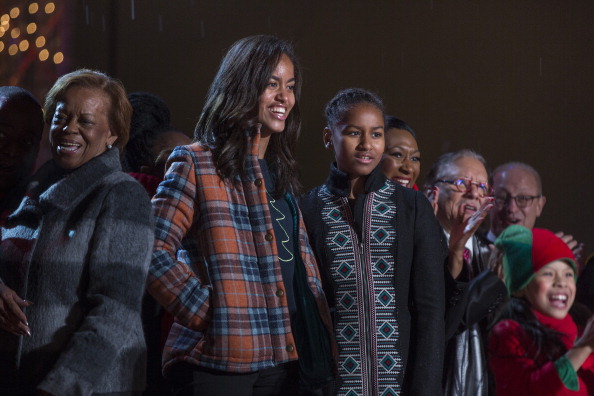
U.S. President Barack Obama arrives with daughter Sasha, wife Michelle, daughter Malia and mother-in-law Marian Robinson for the ceremony to light the White House Christmas tree in Washington, December 3, 2009.
---------REUTERS/Jonathan Ernst


From NPR:

Obama Family Lights National Christmas Tree
by The Associated Press
WASHINGTON
December 3, 2009, 08:55 pm ET


Surrounded by celebrity performers and characters from the North Pole, the Obama family on Thursday led a countdown and lighted the National Christmas Tree.

First lady Michelle Obama and daughters Malia and Sasha helped President Barack Obama press a button to light the tree, an annual tradition since the 1920s. "I'm technologically challenged and I might not get this right," the president joked. "Everybody has got to help me out here."

The Obamas and the spectators counted down from five, and the red and yellow lights came alive on the 40-foot Colorado blue spruce growing on the Ellipse, just south of the White House. "It worked," Obama shouted.

After the lighting, Sheryl Crow, who performed at some of Obama's inaugural festivities, sang "Jingle Bell Rock." Hip hop artist Common rapped as a children's group sang. "American Idol" winner Jordin Sparks dazzled onlookers bundled in coats and scarves.

"I told Sasha we're not on 'American Idol,'" the president said about his 8-year-old daughter, who sat on his lap during part of the event. The Obama family and Vice President Joe Biden and his grandchildren watched from seats beside the stage, behind a clear protective shielding.

Mrs. Obama sat on stage and read "The Night Before Christmas" as children in knit hats and mittens surrounded her.


Rest of article at link above.

xmastree1

OBAMA/
First Lady Michelle Obama applauds after reading the "The Night Before Christmas" to children during the National Christmas Tree lighting ceremony on the Ellipse in Washington December 3, 2009.
------------- REUTERS/Kevin Lamarque

OBAMA/
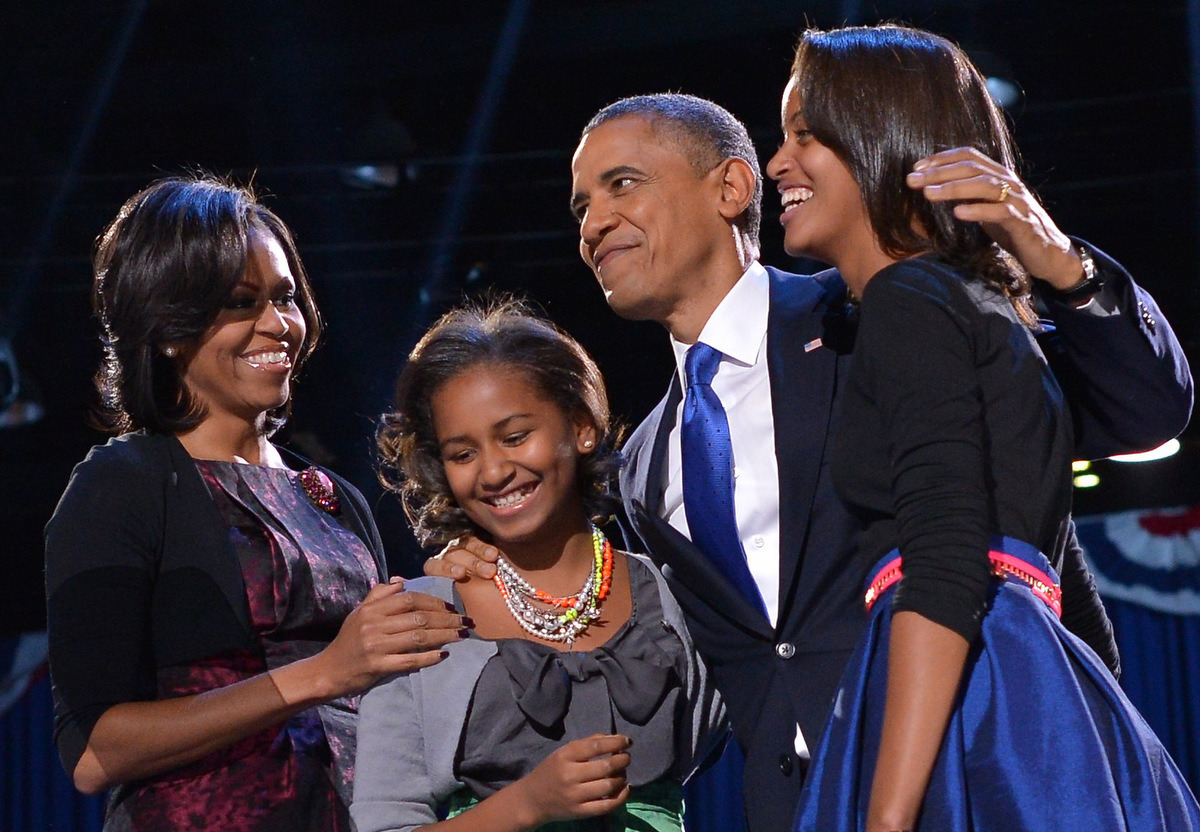
The Obama family reacts after lighting the National Christmas Tree on the Ellipse in Washington December 3, 2009. (L-R) U.S. President Barack Obama, daughters Malia, and Sasha and First Lady Michelle Obama.
---------------REUTERS/Kevin Lamarque

OBAMA/
US President Barack Obama (R to L), with wife Michelle and daughters Sasha and Malia, attends an event to light the White House Christmas tree in Washington, December 3, 2009.
-----------------------REUTERS/Jonathan Ernst

OBAMA/
US Vice President Joe Biden, First Lady Michelle Obama and her daughters Sasha and Malia wave to Santa at a ceremony to light the White House Christmas tree in Washington, December 3, 2009.
---------REUTERS/Jonathan Ernst

OBAMA/
U.S. President Barack Obama, First Lady Michelle Obama and daughter Sasha attend the National Christmas Tree lighting ceremony on the Ellipse in Washington December 3, 2009.
-------REUTERS/Kevin Lamarque

Thursday, December 03, 2009

Two for One - Mike Williams and Smokey Robinson


Tuesday, December 01, 2009

"Daddy, Where Do Democrats Come From?"

I'll tell you in a series of four charts. The basis of this post comes from work I've been doing for my Southern Politics course. I've explained to the class how the Republican Party has evolved into a Southern Party over the last twenty years, but I had no visual evidence of this. Well, here's some evidence.

First, we see that over the last twenty years, the Democratic Party actually appears somewhat bipartisan as 48% of its House members were Democratic. That's balance. Especially when we compare the South to New England, where 75% of its members have been Democratic. Conversely, the six Plains states are remarkably Republican, much more so than the South. And, yes, I use the Confederacy to define the South, not the Census Bureau's definition. In my view, if you didn't secede, you're not Southern.


But, this only tells us where Democrats have come from, in the aggregate, over the last 20 years. It's better if we break it down by Congress. In the second graph, we see that New England hasn't always sent 75% of its' delegation to Congress as Democrats. Instead, we see a steady up tick. IN the 101st Congress, New England showed more balance, a 60:40 ration, then a steady upward creep, culminating in 100% of its' delegates being Democratic for the 111th Congress. Conversely, if you look at the dark, red line, the Plains states, you see something different. Perfect balance, then Democrats fall off the cliff in the 104th Congress. This, of course, is when Newt Gingrich-led Republicans regained the majority in the House after forty plus years in the wilderness. The Mountain West and South also severely experimented with Republicanism during this stage, yet the large Black population in the South, kept (and keeps) the South from becoming wholly Republican. The Midwest, Mid-Atlantic and West were never in serious likelihood of becoming Republican. Obviously, if the GOP wants to grow, New England and the Mid-Atlantic are areas of concern; I'd advise the GOP to concentrate on the Midwest and Mountain West.


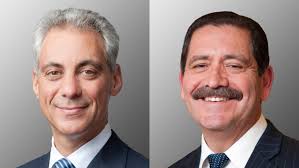
Still curious, I wanted to know how Southern the Republican caucus had become. But, first, we'll examine the Democratic side. What strikes me when I look at the next chart is the remarkable balance of the Democratic caucus. This might make reaching intraparty deals a difficult proposition, but it's probably better than the Republican alternative, which I'll get to shortly. In the 101st Congress, four different regions (West, South, Midwest and Mid-Atlantic) each provided at least 14% of the Democratic caucus. No one regional delegation clearly dominated. By the 111th Congress, the Democrats (no doubt, thanks Rahm Emanuel's efforts) had achieved even more balance. While the Southern Democratic share shrunk from 30% to 23%m there are still four regions comprising at least 18% of the Democratic caucus and the delegations from New England and and the Mountain West are larger. That's balance.


Now, let's examine the House GOP. First thing I notice is that in the 101st Congress, the Republican Party had commendable balance. Four different regions comprised at least 14% of the Republican House caucus. But, and quite noticeable, is that by the 111th Congress, only three regions comprised that much (South, West and Midwest). The Republican Party reached oblivion in New England (0%) and the Republican delegation from the Mid-Atlantic was cut in half (18% to 9%). What caused this change? The Southernization of the Republican Party. Southerners went from 22% of the GOP caucus to 41% in just twenty years. In so doing, Southerners pushed out New Englanders and those from the Mid-Atlantic.

Monday, November 30, 2009

Okay, I'm just gonna have to go all Doctor on you now

No, it doesn't mean that I'm going to charge you for reading this. :-)

I've talked about healthcare reform over and over again (I don't see how Joan does it every day without going insane). I've talked about healthcare from an emotional standpoint and from an American legislative standpoint. I've talked about all the benefits of healthcare reform. Well, I'd like to take a different tactic. I would like to review the medical literature. I've picked several studies which I will describe over the next several days. The one thing that all of these studies have in common is that they point out that health insurance is a predictor of outcome. On Wednesday or Thursday, I'm going to review an article from the Journal of the American Medical Association which clearly states that having a unified health program has survival benefits (we don't have a coordinated, organized healthcare system in the United States).
As a trauma surgeon, I don't like to talk "shop" with people who are not in the medical profession. As soon as you start mentioning cytokines and mitochondria DNA, most people's eyes glaze over. But, with watered-down legislation creeping through the Senate at a glacial pace, I thought it was important for me to go over some of this literature. The literature makes approximately the same point that Keith Olbermann made approximate monthly go when he talked about having health insurance being life-and-death.

In trauma, we, trauma folks, would like to think that we treat patients all the same. Many states have trauma systems, in which an injured patient, is shunted away from small hospitals that probably cannot help that patient and toward trauma centers who have the expertise and the manpower to help. This move has been shown to save lives. Most, if not all trauma centers have protocols which are then individualized for a particular patient. We have found through numerous studies that these protocols help save lives. Therefore, you would figure that the outcome of a patient who was seriously injured in a car crash would be directly related to his or her injuries which is true for the most part. A recent study has thrown a wrench in this.

A study, which was published in The Archives of Surgery in 2008, investigated over 400,000 patients which had been entered into the National Trauma Databank. One thing that we have known for years is that socioeconomic status does influence your outcome. As expected, mortality rates for Black and Hispanic patients were higher than those of White patients. Patients with insurance had a mortality rate of approximate half of those without insurance. Now, for the shocker -- both Blacks and Hispanics with insurance who were injured had a mortality rate less than Whites without insurance.
This was a very surprising result. Numerous studies in trauma patients over the years have shown differences in outcomes amongst the races. As more and more studies have been done, it is clear that race is a surrogate for multiple other factors including eating habits, living conditions, and other things that can affect outcome. It is also clear that insurance acts as a surrogate for those same kind of factors. People with insurance have jobs. People with jobs drink less than people without jobs. People with jobs tend to live in better conditions than people without jobs. What was surprising is how strong insurance is as an indicator of lifestyle.

So, if every American has health care coverage will they all have better outcomes from trauma? Well, this question is somewhat hard to answer. On one hand, just having insurance does not get you to live in a better house, in a better neighborhood with better indoor plumbing and a refrigerator that works all the time. On the other hand, one of the huge problems that we have in the trauma community is that we have to send many people home from the hospital, after their hospital stay is over, when they should go to a rehabilitation center for more therapy but they can't qualify because they don't have insurance. These patients will instantly do better. Getting adequate health care coverage to all Americans is a step towards better equality.

I would like all members of Congress to read this article. This is important. This is what we're fighting for. We're fighting for a more equitable society. I'm not trying to take away any healthcare from anybody but instead, I want to add healthcare to those who don't have it.

Tomorrow, I'm going to review an article called health insurance and mortality in United States adults. This article expands on the concept that insurance is a marker for outcome.

Saturday, November 28, 2009

President Obama's Weekly Address

Friday, November 27, 2009

The First Lady Receives the White House Christmas Tree

The 'Gate Crashers' at the State Dinner....symptom of something more serious?

Remember this?


Now, I was never a fan of Dubya, but fact is...he was President of the United States. And, I never could get the explanation as to why this man wasn't riddled full of bullets. The first shoe was bad enough, but that he was allowed to get off the second one without a bullet in him made no sense. There could have been any kind of chemical or biological weapon on the shoe. I know, I sound like an episode of 24, but you know these types of weapons exist.

Maybe it was because Bush's popularity was so low by that point that the seriousness of the situation didn't get the attention it deserved. Maybe I missed it, but I don't remember reading about any inquiries where the Secret Service is concerned. Maybe there was, and someone lost their job on the Presidential Detail - I hope so.

Which brings me to the ' Gate Crashers' at the State Dinner.

In case you don't know the story, two folks wound up 'CRASHING' the State Dinner. Whether they are reality show contestants or not, they were able to crash the State Dinner. This story has never been funny or amusing to me. It's dangerous.


The more benign conspiracy theory is that someone wants to make the Obama White House look incompetent. And, that someone inside the White House, who wants the same, helped them.

It's obvious that someone INSIDE HELPED THEM.

Now, you have the more sinister conspiracy theory of that this is a 'dry run' for something altogether more heinous, and there is a leak in the Secret Service.

You can choose either one, but both are disturbing.

state-dinner-crashers


Who was at the State Dinner, and why was this breach a threat to national security?

Here is the Presidential Line of Succession
1 Vice President -- Joe Biden
2 Speaker of the House of Representatives-- Nancy Pelosi
3 President pro tempore of the Senate -- Robert Byrd
4 Secretary of State -- Hillary Clinton
5 Secretary of the Treasury-- Timothy Geithner
6 Secretary of Defense -- Robert Gates
7 Attorney General -- Eric Holder


Outside of Senator Byrd, everyone else was at the State Dinner.

There were two of them, and if they had more sinister motives, they could have divvied up the list, and set about causing instability in the United States Executive Branch.

So now, today, we have an apology from the Secret Service.

From the NYTimes:
Secret Service Apologizes for Allowing Pair at State Dinner
By HELENE COOPER and DAVID STOUT
Published: November 27, 2009


WASHINGTON — The celebrity-seeking couple who sneaked into a state dinner this week came face-to-face with President Obama and his wife, Michelle, the White House said Friday in a disclosure that underscored the seriousness of the security breach and prompted an abject apology from the Secret Service.

A White House spokesman said the couple, Michaele and Tareq Salahi of Virginia, met the president and first lady in a receiving line at their first state dinner, honoring Prime Minister Manmohan Singh of India. That disclosure coincided with a statement in which the director of the Secret Service, Mark Sullivan, said his agency was “deeply concerned and embarrassed” by the events at the dinner Tuesday night.

“The preliminary findings of our internal investigation have determined established protocols were not followed at an initial checkpoint, verifying that two individuals were on the guest list,” Mr. Sullivan said.

“Although these individuals went through magnetometers and other levels of screening, they should have been prohibited from entering the event entirely,” Mr. Sullivan said. “That failing is ours.”


You've got that right. It IS your responsibility. Yes, you're overtaxed. Yes, you're working under the pressure of having a President with more threats than any in history. Maybe there needs to be a reshuffling of responsibilities so that there is a specific unit dedicated to Presidential threats.

The thought, that they shouldn't be charged with something, is ridiculous. They BREACHED SECURITY AT THE WHITE HOUSE! I don't know which laws they broke, but if you and I had breached White House Security, you wanna bet that nobody would be listening to an 'OOOPS, my bad' from us?

Would anyone have uttered the words that 'you don't know if they broke any laws', if the Gate Crashers looked like this:

formalwear2
--Photo by 7x7/San Francisco


Yeah, I don't think so either.

What a Left-Wing Presidency Looks Like

Hat tip to the Open Left blog for first alerting me to this item.

The American right wing’s accusations of President Barack Obama and his policies as Socialist has always baffled me. Because Obama has demonstrated through his Cabinet appointments, attempts at bipartisanship with obstructionist Republicans, and actual policies that he is no Socialist – nor even a leftist. He is very much a traditional American Democrat with strong free-marketer, corporate leanings.

For a portrait of what a strong, Left-leaning presidency of a large country and major economy might look like it would be much better to set one’s sights overseas towards someone like President Luiz Inácio Lula da Silva of Brazil.

From Spiegel Online:

Brazil's President Lula: 'Father of the Poor' Has Triggered Economic Miracle


His supporters liken him to US President Franklin D. Roosevelt, who dammed the Tennessee River in the 1930s to provide electricity to the region and who launched the New Deal, a massive investment program to overcome the Great Depression. But critics see the undertaking as a massive money pit…

Now he is both the darling of bankers and the idol of the poor. With the so-called worker-president at its helm, Brazil is attracting investors from around the world. Jim O'Neill, the chief economist at Goldman Sachs, invented the acronym BRIC, for the emerging economies of Brazil, Russia, India and China, and predicted a bright future for the South American giant. But his colleagues derided him. China and India certainly had prospects, but Brazil? For decades, the country was seen as a shackled giant, plagued by never-ending crises and inflation…

The country has repaid its foreign debt, and it has even become a lender to the International Monetary Fund (IMF). The government has accumulated more than $200 billion in reserves, and the Real is considered one of the world's strongest currencies. International experts foresee a decade of prosperity and growth for the country. Lula predicts that Brazil will be one of the five biggest economies on Earth by 2016, the year Rio de Janeiro hosts the Olympic Games. It will host the soccer World Cup in 2014…

All of Brazil is basking in the fame of its president who, less than seven years after coming into office, now enjoys an approval rating above 80 percent. The opposition has all but disappeared and the national congress has become submissive. Lula runs the country like a patriarch, so much so that his predecessor, Fernando Henrique Cardoso, is already accusing him of "authoritarianism" and warning that Brazil is on the road to state capitalism.

There is a kernel of truth to Cardoso's claims. Lula has never had any confidence in the market's ability to heal itself, and he sees the state as the framer of a new social order. He loves impressive projects and nationalistic gestures. He is a pragmatist, but he despises speculators. "White people with blue eyes" brought the world to the brink of financial ruin, he said recently. He meant bankers.

The financial crisis has only confirmed Lula's skepticism toward capitalism. Lula believes that Brazil coped with the crisis more effectively than other countries because the government took corrective action early on. According to Lula, fighting poverty and the equitable distribution of income cannot be left up to the market.


Full article at Spiegel Online.

This is my response to American free-market worshipping conservatives whenever they invoke “Socialism” in their accusations of the Obama administration. If they want to see what a leftist does once he has attained power they shouldn’t look to Obama. They should, instead, look at Lula and see what he has done for Brazil. And to see that perhaps a little bit of Socialism -- and I mean Socialism for real instead of pretend boogeyman Socialism that the American right likes to invoke -- would do the USA a lot of good.

Lula’s Brazilian success story is what real reform looks like and a portrait what real reformers do. It is what pushing through and delivering on a populist agenda looks like without compromising on one’s beliefs and commitment to ordinary people as one’s primary constituency. Lula is an example of how an unabashed leftist skeptical of capitalism and its potential to spread wealth evenly among the population rules as President. His success is a shining example of the power of government and the economy harnessed for the interests of ordinary people primarily rather than speculators and bankers.

Thursday, November 26, 2009

Happy Thanksgiving!

The Official Pardoning of the Turkey


From all the bloggers here at MOA, we would like to wish you a Happy Thanksgiving.

This holiday, more than any other, is about family and friends- spending time with them, appreciating the blessings that you have.

Hope you eat good food, and have good times.


Wednesday, November 25, 2009

Sarah Palin Supporters At Book Signing

Another video with the Teabaggers. Thanks to Oliver Willis.

This is why I tweeted a few days ago that The United States was finito (long-term) and that I might consider Canada.


Is the public school system to blame for this? There is more to it than a lack of education...has to be more to it than that. I think it also has to do with cultural isolation (esp. in White rural U.S. in Rustbelt and the South), geographical or national isolation (not having a basic understanding of the World outside of the lower 48 State box or even outside of your region within that box), a certain level of prejudice, and being in a Conservative echo chamber all your life. It takes a perfect storm of a lot of things to create this IMO. Pretty scary stuff... knowing that these are the folks who are going to the ballot box with the power to make decisions that impact the lives of the rest of us.

This only backs up my long held belief that voters in this Country respond more to the superficial, such as who they would like to have a beer with or have dinner with, who they identify with racially and culturally, who they identify with in terms of religious and moral views, as opposed to basing their voting decisions on actual policies and facts. They are not the most engaged and informed voters...yet they are some of the most emotionally driven and most loyal. This is especially true for Conservatives/Republicans. And the Right Wing media (Limbaugh & Co.) has taken full advantage of these people for their own gain IMO. (whipping them up into a frenzy with propaganda...so that they not only slam and literally threaten the President...but buy their books as well). The manipulation of these folks is epic.

Tuesday, November 24, 2009

The State Dinner for the Prime Minister of India -Manmohan Singh


The President's Toast Tonight at the State Dinner